 By Mya Finn
BodyPump-style training is often described as a strength class, but it is different from traditional heavy lifting. It uses lighter to moderate loads, higher repetitions, music-driven timing, and full-body movement. This creates a workout that challenges strength endurance, coordination, stamina, and mental focus rather than only maximum force.
For people thinking about joining a bodypump class, it helps to understand what the training actually builds. It is not designed to turn every participant into a powerlifter. It is built to help people move through repeated resistance exercises with control, improving muscular endurance and whole-body conditioning over time.
It Builds Muscular Endurance
The most obvious training effect is muscular endurance. Participants repeat movements many times, which teaches muscles to keep working under fatigue. This is different from lifting a heavy weight for a few repetitions.
Muscular endurance matters because life often requires repeated effort. Standing for long periods, climbing stairs, carrying bags, and maintaining posture all involve muscles working again and again.
BodyPump-style training helps condition the body for that kind of repeated demand.
It Builds Movement Confidence
Many people feel unsure around weights. They may not know how to squat, press, row, or deadlift safely. A guided class gives them a structured place to learn common strength patterns.
The instructor demonstrates movements and cues technique throughout the session. Participants can start with lighter loads and build confidence gradually.
This confidence can carry into other areas of the gym.
It Builds Full-Body Conditioning
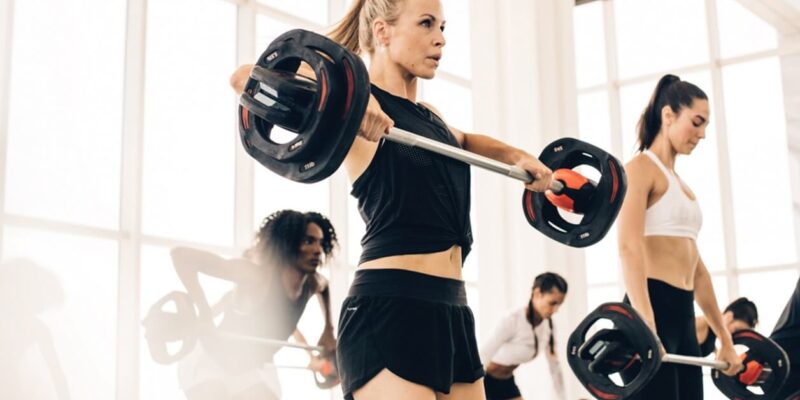
A BodyPump-style class usually trains several muscle groups in one session. Legs, chest, back, shoulders, arms, and core may all be included. This creates a full-body training effect.
Because the class moves through repeated sets with limited rest, it also challenges stamina. The heart rate may rise, breathing becomes active, and the body has to keep working.
This makes the workout feel both strength-based and conditioning-focused.
It Builds Better Tempo Awareness
Tempo means the speed of each movement. In music-driven strength classes, participants often lift and lower with a specific rhythm. This teaches control.
Instead of rushing through repetitions, participants learn to move with timing. Slow phases can increase muscle tension. Faster phases can raise intensity. Pauses can improve stability.
Tempo awareness helps people understand that how they lift matters, not only how much they lift.
It Builds Core Control
Even when a class is not focused only on abs, the core is involved. Squats, rows, presses, lunges, and deadlift patterns all require the trunk to stay stable.
Participants learn to brace, maintain posture, and avoid collapsing under fatigue.
This can support better movement quality in other workouts and daily life.
It Builds Postural Strength
Many adults spend long hours sitting. This can affect posture, especially through the upper back, shoulders, and hips. Barbell-based classes often include pulling and pressing movements that train postural support.
Rows, deadlifts, squats, and shoulder work can help strengthen areas that support alignment.
Better posture is not created by one class, but regular strength training can contribute to better body awareness.
It Builds Mental Resilience
High-rep strength work can be mentally challenging. The muscles begin to fatigue, but the set continues. Participants must stay focused, control breathing, and maintain technique.
This builds mental resilience. People learn to continue through controlled discomfort without losing form.
That skill can be useful in other fitness settings too.
It Builds Training Consistency
A major benefit of class-based training is structure. Participants do not need to create a full workout plan. They attend, follow the session, and train the full body.
This makes consistency easier. Many people are more likely to train regularly when the session is scheduled and guided.
Consistency is where the real physical changes happen.
It Does Not Build Everything Equally
BodyPump-style training is useful, but it is not the answer to every fitness goal. It may not build maximum strength as effectively as heavy progressive lifting. It may not replace dedicated cardio for endurance athletes. It may not replace mobility training for people with stiffness.
Understanding this helps set realistic expectations.
The class is best used as part of a balanced fitness routine.
It Supports Body Composition When Paired With Lifestyle Habits
High-rep resistance training can support body composition by building activity, improving muscle endurance, and helping people stay consistent. But nutrition, sleep, daily movement, and recovery still matter.
People should avoid expecting one class format to do everything alone.
The strongest results come from a complete lifestyle approach.
It Builds a Sense of Progress
Progress may appear in several ways. A participant may increase weight slightly, complete more repetitions with good form, feel less fatigued, move with better timing, or recover faster after class.
These wins matter because they keep motivation grounded.
Progress is not always dramatic, but it becomes meaningful when tracked over time.
A Practical Strength Endurance Tool
BodyPump-style training builds muscular endurance, confidence, coordination, tempo control, and full-body conditioning. It is a practical option for people who want guided strength work without creating their own program from scratch.
People comparing group strength options may consider True Fitness Singapore when looking for a structured environment that supports barbell-based endurance training and full-body fitness.
FAQ
Is BodyPump-style training strength training?
Yes, but it focuses more on strength endurance and repeated effort than maximum heavy lifting.
Can it help beginners learn weights?
Yes. The guided format and adjustable loads can make strength training more approachable.
Does it build cardio fitness too?
It can support conditioning because the class involves continuous effort, but dedicated cardio may still be useful.
Should it be combined with other workouts?
Yes. Strength endurance classes work well with cardio, mobility, and recovery.